Identify the quantities you need
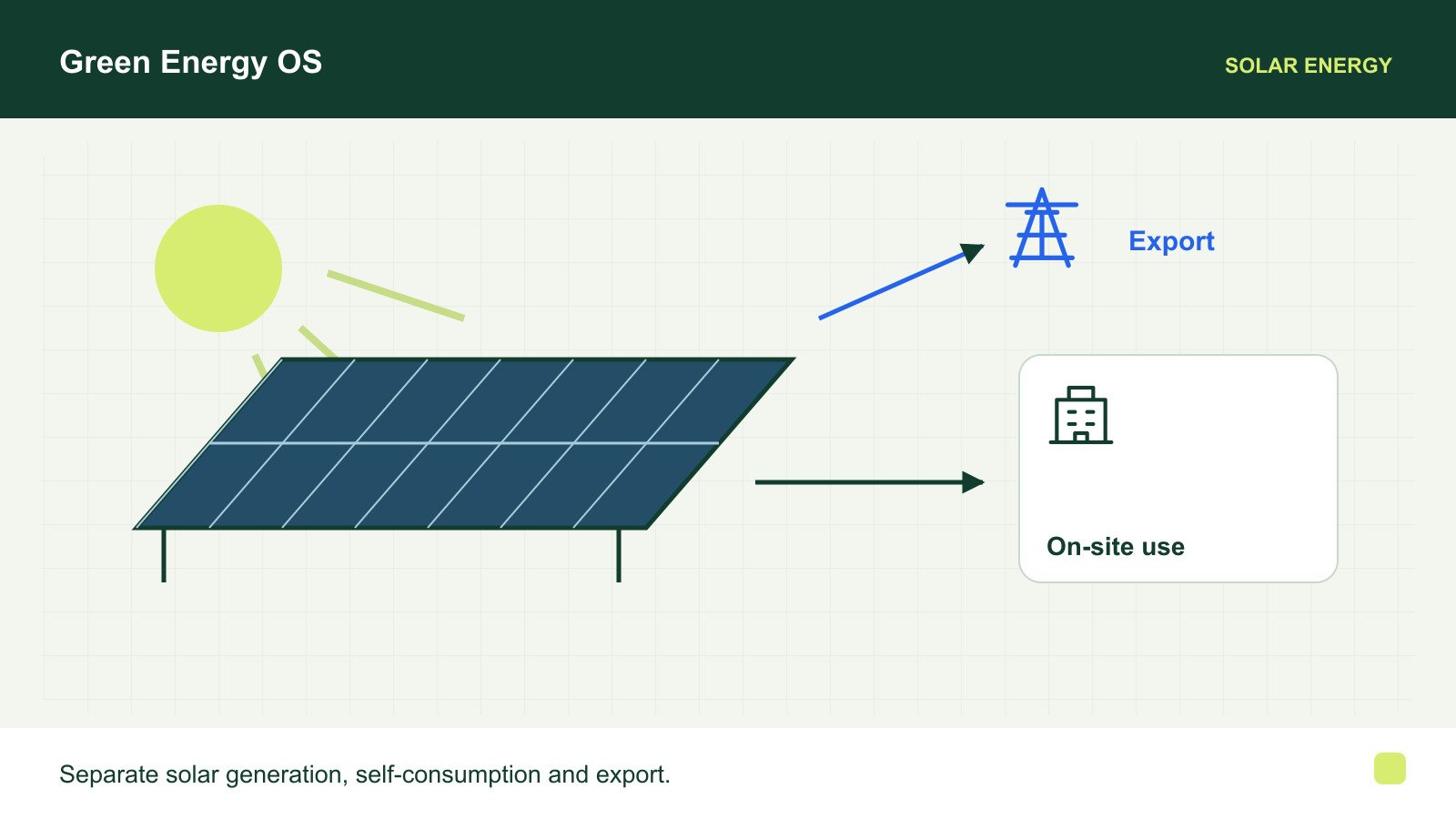
Document where the generation meter sits relative to the incoming supply and site loads. If self-consumption or export matters to your reporting, identify the additional measurements or reconciliation needed. Confirm whether each value is cumulative energy, an interval total or instantaneous power.
Review patterns with operating context
Changes in solar output can reflect weather, shading, availability or operating conditions. Compare production alongside the time of day and available site records before attributing a drop to an equipment fault. Industrial demand may not align with the generation profile, so review both supply and consumption rather than generation alone.
Explain carbon claims carefully
A carbon claim needs a defined baseline, appropriate factors and the relevant ownership or contractual evidence. Avoid treating every generated kWh as an automatically verified avoided-emissions credit. Electricity accounting and a project-level avoided-emissions assessment are different tasks.
Connect solar with the organization hierarchy
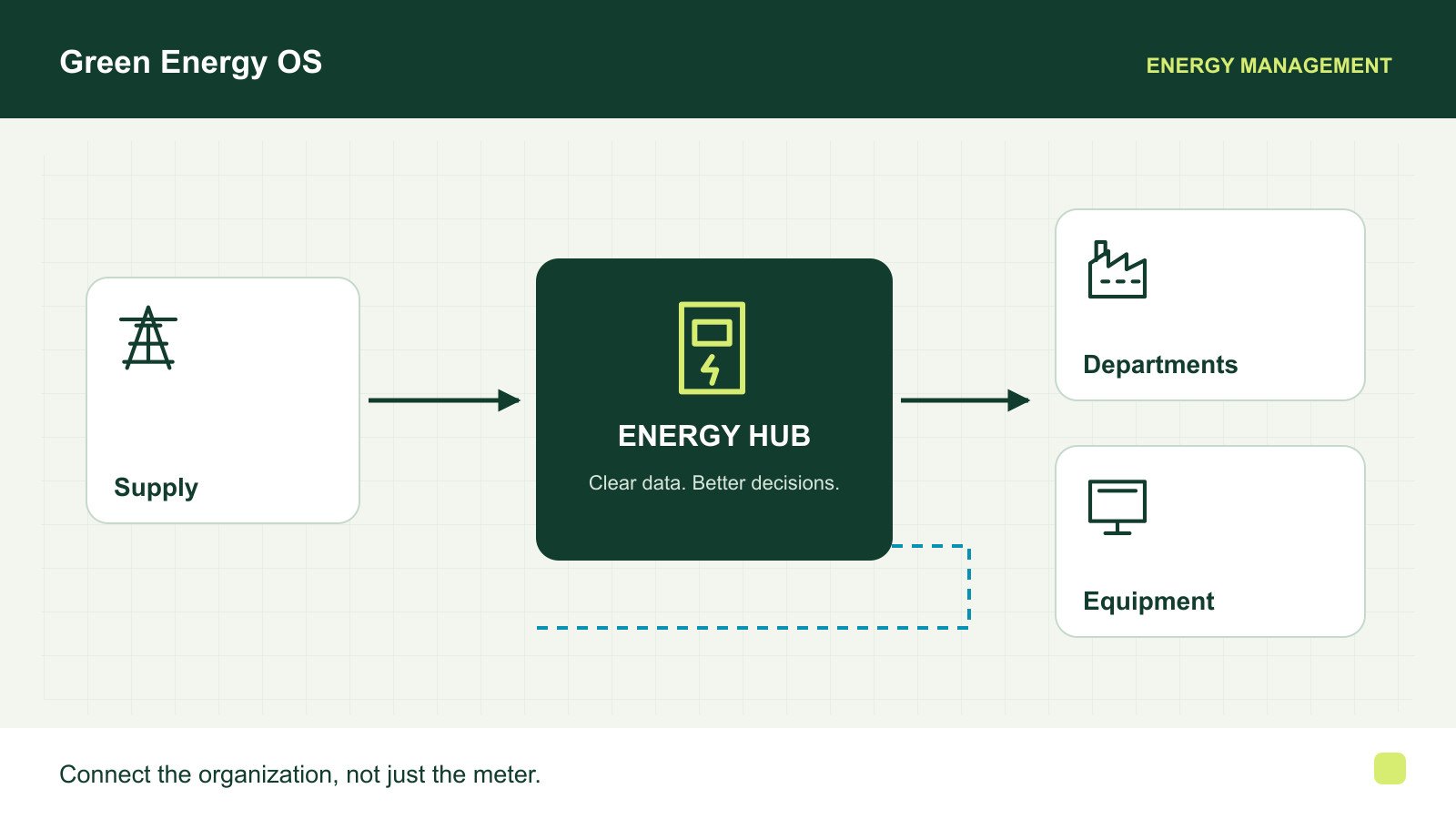
Green Energy OS supports Solar as a separate source category alongside other supplies. Map relevant meters to departments and equipment, retain reading history and investigate gaps before using the data in a management report. Discuss your proposed measurement boundary with us when planning a solar monitoring pilot.
References and further reading
Plan your next step
Discuss metering, energy monitoring and carbon-reporting data requirements with Green Energy OS and Zhejiang Mingkai Technology Pvt. Ltd.
Contact us