Start with a clear metering boundary
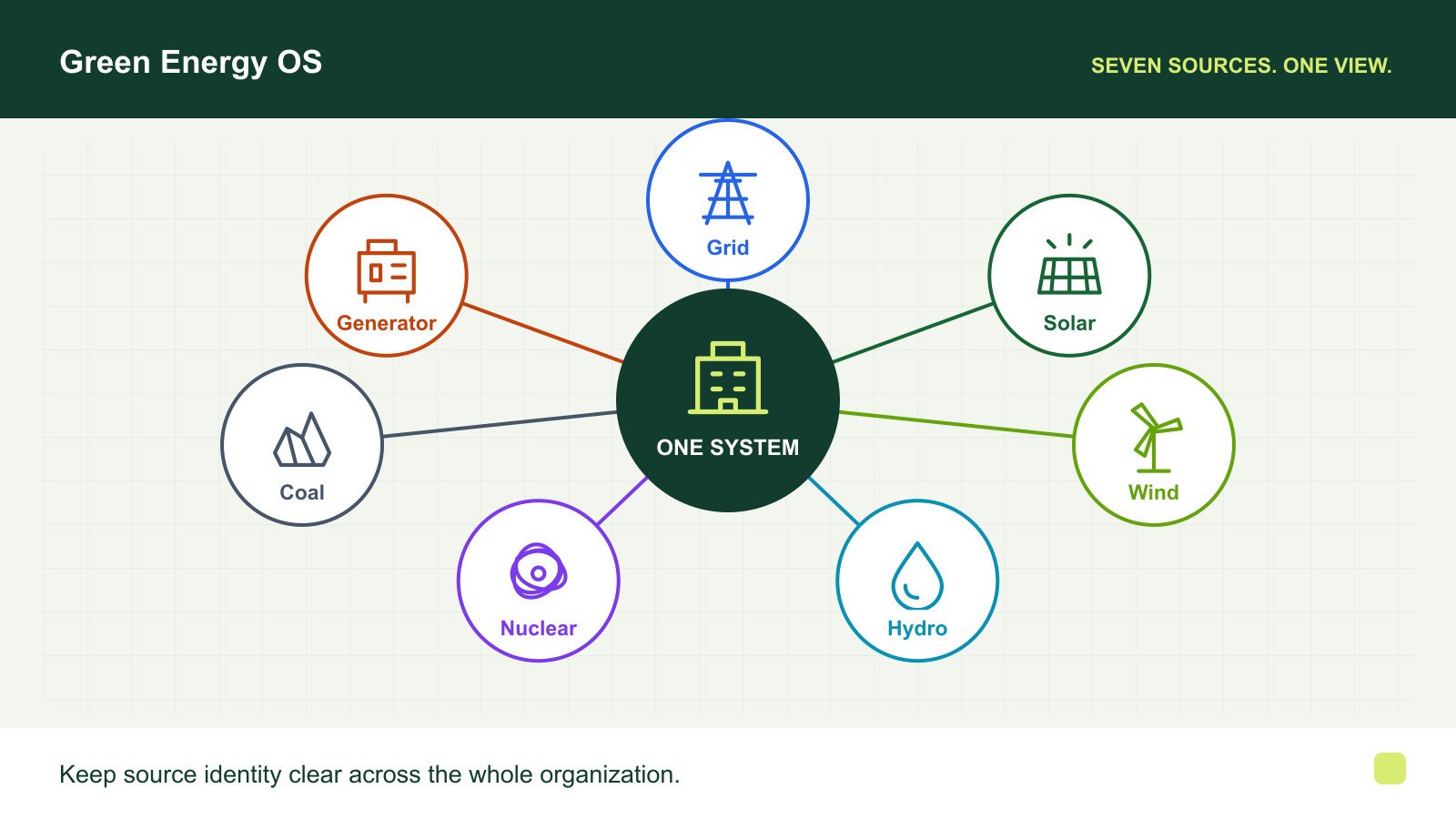
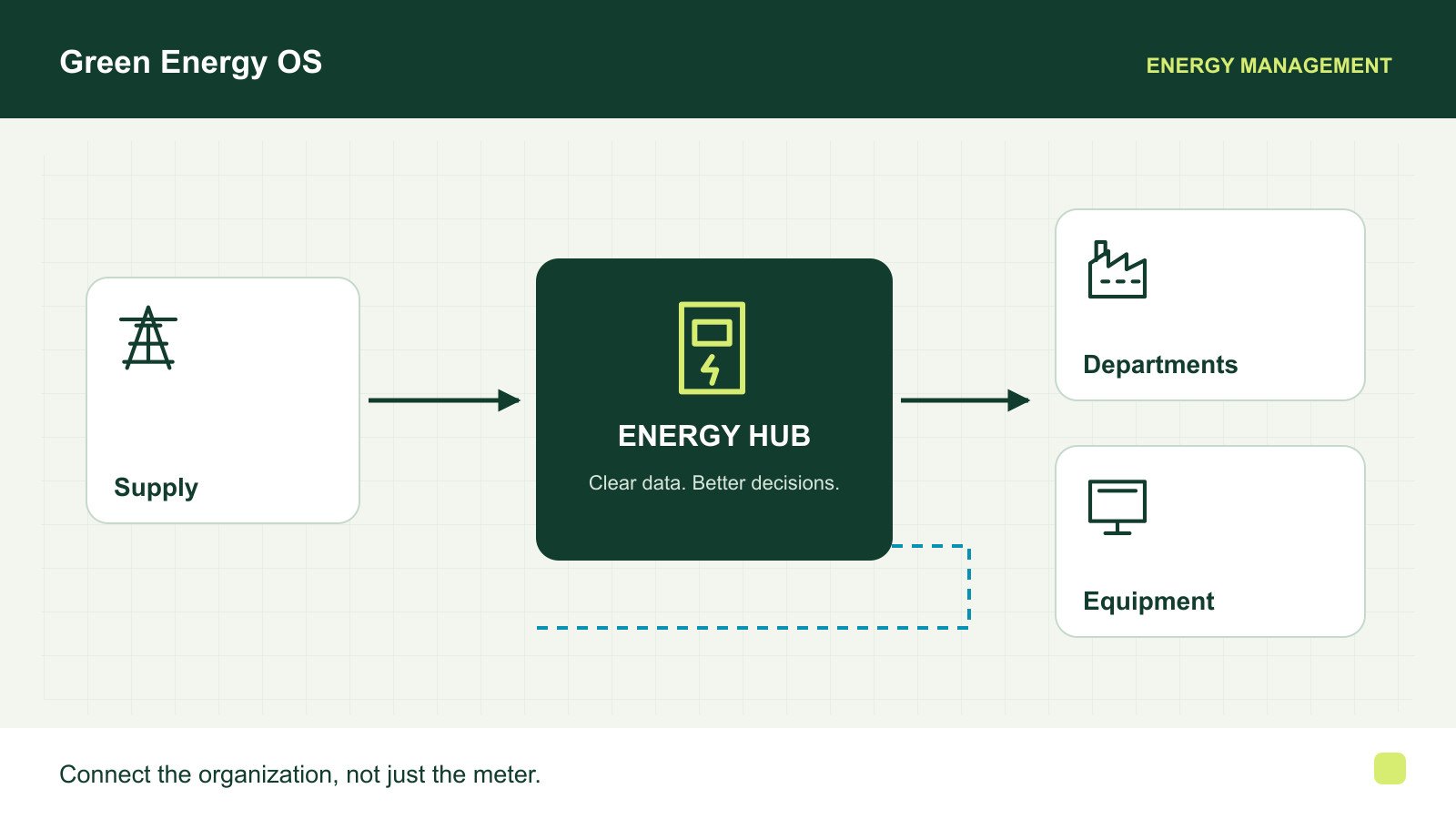
List incoming supplies, generation assets and downstream meters before building a dashboard. A main supply meter and a department submeter may describe some of the same electricity. Decide which readings contribute to organization totals and which provide detail, so energy is not counted twice. Keep a named owner for each meter and record its department, equipment and source.
Connect energy data with daily operations
Green Energy OS organizes readings by organization, department, Sub-Department, equipment and meter. Teams can examine reporting periods, compare recorded consumption and explore a configured energy-flow view. An operational review becomes more useful when readings are considered alongside shift schedules, maintenance work and changes in production.
Make improvements measurable
Choose a baseline period and record the conditions that affect it. An overnight load may deserve investigation, but a larger production run can also explain higher consumption. Document the action taken, compare equivalent periods and examine data coverage before claiming savings. Consumption per unit of output can be useful when reliable production data is available.
Build a focused pilot
Begin with an incoming meter and a small group of priority loads. Confirm units, time zones, reporting intervals and access permissions. Expand only after the data is understandable and reliable. Contact Green Energy OS to discuss a metering and reporting structure suited to your organization.
Plan your next step
Discuss metering, energy monitoring and carbon-reporting data requirements with Green Energy OS and Zhejiang Mingkai Technology Pvt. Ltd.
Contact us